Exclusively, if we talk about the fashion retail industry, textiles and clothing are manufactured from eastern to western world in an industry that has great economic influence, but increases a lot of burden to our natural resources.
So,
just look around and notice, possibilities are, you’re wearing something made
out of fabric material and might also be sitting or standing surrounded by other
textile products. Textile is so important in our lives but in last three
decades, this industry became a significant part of our lifecycle with
countless fiber innovations and their diversified applications and uses.
Let’s start thinking step by step, the farms! the first stage, that grow raw materials and use to make fabrics, including crops like flax, hemp and cotton, demand a lot of rainwater. Furthermore, cotton is exceptionally thirsty plant. In addition, to protect these valued crops, farms also use good enough amount of insecticides (pesticides and herbicides) eventually end up in the environment. Cotton, again, a big culprit, being one of the highest pesticide-intensive crops in the planet.
Do you know that the methods in which textiles are manufactured and printed/dyed/finished sometimes negatively impact the environment!?
Now, let’s talk about synthetic or man-made fabrics like polyester and nylon. These textiles are made from petrochemicals and fossil fuels, which requires lots of water and energy. Manufacturing of nylon also creates greenhouse gasses that damage the air we breathe. And synthetic fabrics are not biodegradable, means something built of nylon can take years to decompose. Now, consider some other types of textiles, also use up a lot of natural resources such as manufacturing an artificial textile material, rayon, formulates from wood pulp, results in the loss of many old-growth forests. And during the process of forming the fabric, the pulp is treated with dangerous chemicals that ultimately find their way into the environment.
And this is not it! the whole process of fiber to fabric, also includes fabric’s aesthetics and functions enhancing activities like bleaching, dyeing and washing that use lots of H2O. These processes yield salts, surfactants, which help dyes absorb fabrics, and other surface-active agents like detergent that don’t decompose, end up in our water.
Testing is a valuable assistance for textile production, distribution, and utilisation. During textiles testing the variation of a fibre or fabric i.e. length, colour, fineness, threads per inch, cover factor, is detected properly. Continuous test of the textiles results improved and efficient output of the production. By doing apparel testing we can evaluate and safeguard the quality of the garments to be used by the end users.
Textile and apparel testing is vital for Fashion Industry and conducted so that apparel manufactures, clothing retailers and wholesalers can estimate and ensure the quality of the garments they manufacture. It is important to note that all standards and regulations encapsulated in the Textile Apparel testing have one or both of the following aims: Safety and Quality. While quality is related more to general consumer satisfaction, safety is an important aspect of products not meeting regulations can jeopardize the health of the consumer.
Usually, a retailer will require that testing be conducted at a third-party laboratory so that factories are not tempted to manipulate the testing results. In addition to avoiding test altering, using a qualified third-party lab will help insure that the “proper” fabric testing method are used.
Several globally recognized standards and practices for testing yarn, fabrics, clothing are applicable for North American and European region and broadly denoted by the name of well-recognized institutions which developed them. Some tests are extremely specialized in nature, but there is a core series of tests that are appropriate depending on the end use of the products. Procedure and equipment may vary among regional labs but basic objectives remain the same.
Explanation of some important tests:
Fiber content: test to determine the fiber composition of textile goods through special, microscopic and chemical methods.
Fabric weight: Test to determine the weight of textile fabrics in garments
Colorfastness to Crocking: Test to evaluate the degree of color, which may be transferred from the surface of the colored textile material to other surfaces by rubbing action such as upholstery, carpet and other wearing apparel in the normal course of use.
Colorfastness to Dry-Cleaning: Test to evaluate the colorfastness property of textiles during commercial dry-cleaning.
Colorfastness to Home Laundering: test to evaluate the colorfastness properties of textiles during actual home laundering process as followed by the consumer.
Colorfastness to Light: Test to evaluate the colorfastness property of textiles when subject to light exposure.
Colorfastness to Ozone: is intended for accessing the Ozone resistance of color of textiles (mostly for denim/jeans).
Colorfastness to Non-Chlorine Bleach: Test to evaluate the colorfastness performance of a textile fabric when subjected to the action of Non-Chlorine Bleach
Colorfastness to Perspiration: Test to evaluate the colorfastness property to Textiles to the effect of perspiration on textile.
Colorfastness to Pool Water: Test to evaluate the colorfastness property of textiles to the effect of chlorinated poor water.
Colorfastness to Sea Water: Test to evaluate the colorfastness property of Textiles to the effect of seawater.
Dimensional stability to dry-clean: Test to determine the dimensional stability (shrinkage or elongation) in woven and knit fabrics when subject to commercial dry-cleaning.
Dimensional stability to Home Laundering: Test to determine the dimensional stability (shrinkage or elongation) in woven and knit fabrics when subjected to home laundering
Appearance Evaluation after Home laundering and dry-cleaning: Test method to evaluate the overall general appearance of a garment and other textile products after repeated home laundering and dry-cleaning.
Seam Slippage: Test to evaluate the resistance to yarn slippage at sewn seams in the woven fabric when a load is applied at seams.
Seam Strength: Test to measure the maximum seam strength which can be achieved in woven fabrics when a force is applied perpendicular to the seam.
Skewness in Fabric: Test to evaluate the percentage of torque in a garment, which may occur during laundering procedures commonly used by consumers at home
Snap/De-snap: test to determine the force required to disengage snap fastness by a pull perpendicular and parallel with the plain of the snap fastener.
Tearing Strength: Test to determine the average force required to continue a tear from a cut in a woven fabric by means of falling apparatus.
Tensile Strength: Test to determine the breaking strength and elongation of most textile fabrics. Not recommended for knit fabrics or fabrics with high stretch value.
Flammability: The purpose of this test is to test and rate the flammability of textiles and discouraging the use of any dangerously flammable clothing.
pH Value: Test to indicate the efficiency of washing operation after various wet treatment either bleaching or scouring.
Formaldehyde: Test to determine the residual presence of Formaldehyde in textile products finished with chemicals containing formaldehyde.
Mechanical Hazard/Sharp edges: Test to evaluate clothing or toys intended for use by infants/toddlers for any measurable risk of injury by laceration or incision.
Mechanical Hard/Sharp Points: Test to evaluate clothing or toys intended for use by infants/toddlers for any measurable risk of injury by puncture or laceration.
Mechanical Hazard/Small parts: Test to evaluate clothing or toys intended for use by infants/toddlers for any unreasonable risk of small parts choking hazard.
Why t-shirts have much more importance in clothing in almost all the ages and genders as compared to other outfits?
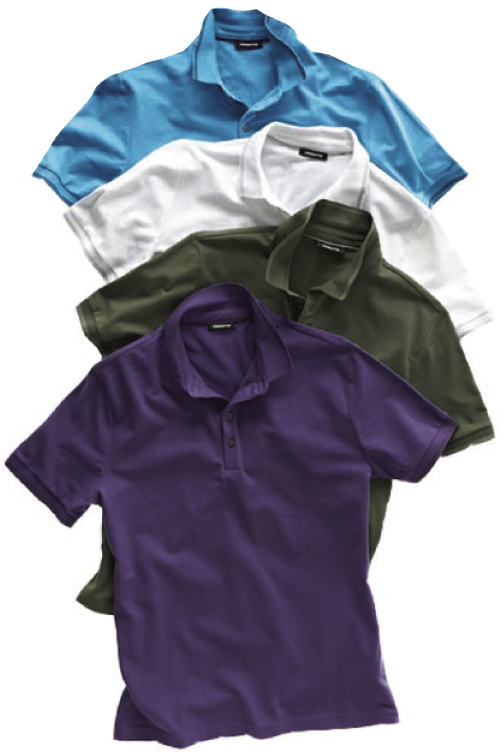
Garment dyed t-shirts, by Hassan Zafar
I think the answer is simple and quite noticeable, some people wear t-shirt because of its comfort, some people wear it because of its different styles. And mostly, people who like to wear t-shirt are practical people. They don’t want to waste or spend time on choosing what outfit they should go with. Several examples are there from normal public on the streets to the billionaire of this era, the Facebook co-founder Mark Zuckerberg, he thinks that it puts too much on a hassle for choosing an outfit and that is why he wears mostly a grey t-shirt. And don’t forget the mastermind, the Apple founder, Steve Jobs!
Crew neck t-shirt illustration – by Hassan Zafar
A t-shirt is a kind of fabric shirt named after the T shape of its body and sleeves. Traditionally, it has short sleeves and a round neckline, known as a crew neck which lacks a collar. They are mainly made of a stretchy, flexible looping structure, light and inexpensive fabric and are easy to clean.
From T-shape to The T-shirt!
The earliest t-shirt dates back to sometime during Spanish-American war in late 1800s and in early 1900s, the U.S. Navy first supplied them as undergarments. It was a white cotton short-sleeved and crew necked undershirt to be worn under a uniform. Labours used to cut their jumpsuits in half to keep cool in warmer months during the year. So basically, t-shirt progressed from undergarments used in the 19th century and modified from there to general use casual clothing in the mid-20th century. Soon it became popular as a bottom layer clothing for workers in various industries. It was considered the shirt of choice for young boys because of inexpensive, easy cleaned and easily fitted characteristics. And later these t-shirts were produced in numerous colors and patterns for different target markets. The t-shirts gained more fame and achieved significance as trendy, stand-alone, outerwear garments in the 1950s after Marlon Brando, an American actor and film director, wore in one of his movie.
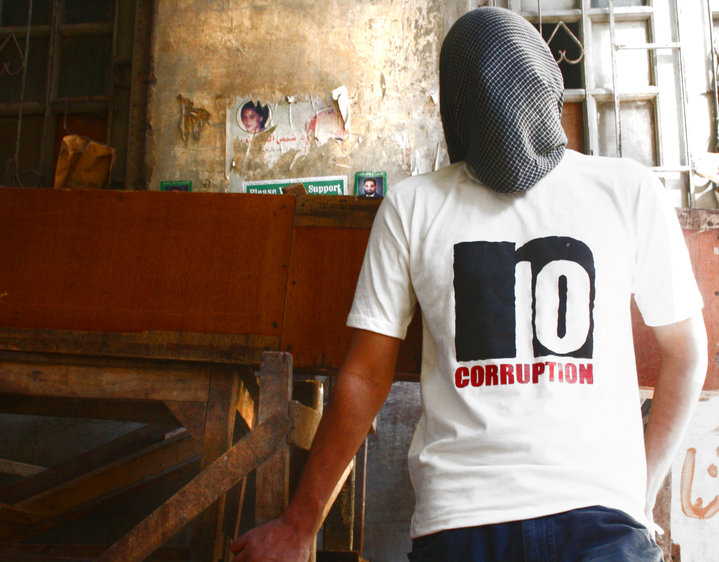
No Corruption – By The Design Hub Model – Rameez Arif, Co-Founder/Artist at InkGrave Tattoo studio. Photographer: Hassan Zafar
Prints on t-shirts were in limited use in 1940s and in the 1960s till 1990s, printed t-shirts gained acceptance and became popular for self-expression with any imaginable combination of words as well for different brand advertisements, political messages, protests and souvenirs.
In
the early 2000s the rise of online shopping by online start-ups, caused a rapid
increase of new t-shirt ideas and trends which led to disruptive innovations
included the flip-up T-shirt, which the wearer can lift and stretch over their
head to display an interior print, and all-over print clothing.
T-shirts are commonly made from cotton fibers with uniquely pliable texture in a jersey knit compared to woven fabric. These days t-shirts are produced by two main methods, the flat knit and circular knit machines. The new and modern types have a body made tubular form fabric with no side seams, produced on a circular knitting machine. The manufacturing of t-shirts has become highly mechanised including cutting the fabric with a laser or waterjet machines.
The current versions are available in many dissimilar designs, fabrics
and styles include crew-neck (also called a U-neck) and V-neck shirts. In this time
and era t-shirts are among the most worn garments of clothing used and are mainly
popular with branding for businesses, as they are reasonable to make and
purchase.
Different varieties of t-shirt fabrics
With innovations and advancements in the field of textiles, fabric plays a key role in determining a number of elements of any garment. Particularly, in the knits, fabric can determine how well a t-shirt will be able to hold its shape even after numerous numbers of washing and wearing
Why? Simply put, the less consumers have to think about a purchase, the more likely they are to buy. Overwhelming choice makes the shopping experience nerve-wracking. Unable to easily evaluate offered options, consumers become nervous and edgy about their purchase. This anxiety is compounded by the online market research through mobile or other digital devices. The time and effort spent in research only makes the shopping experience more laborious and backbreaking.
Retailers and brands have progressively offered consumers more choice and more information, believing that providing a wide variety of options and deeper content would support purchase decisions, create added value to shoppers and build trustworthiness.
The limitless choice and bottomless information only create confusion in the minds of customers. Instead of adding difficulty to consumers’ lives, brands should engage shoppers through experiences that streamline consumer decision-making and make them easily able to get what is being offered!
Retailers and brands have increasingly proposed consumers more choice and more information, believing that providing a wide variety of options and deeper content would support purchase decisions, create added value in products and build a brand loyalty. What we are seeing is that immeasurable choice and endless information only create confusion in the minds of purchasers. Instead of adding complexity to consumers’ lives, these brands should engage consumers through experiences that simplify consumer decision-making and make them easily able to get what is being offered.
Simplicity is less of a trend and more a growing necessity for the consumer’s time and experience. These days customers look for retailers and brands they can trust to help streamline their lives or provide solutions that make their lives simple and easier. The challenge lies in identifying the right amount of product (options), product information and guidance consumers need to help them make choices!
As both a consumer and creator, it should be a practice to think of the lifetime of what I’m producing and acquiring. We have no other choice but to reconsider resources and processes and make sustainability, a key to business, as it’s so crucial to the planet, from both human and environmental perspectives. The rate at which we create, consume and discard items both depletes our natural resources and puts a large group of people across the world at a huge risk of exploitation. Without taking it into attention, we will exhaust our resources on this globe, which will affect all of us – consumers, businesses, and the design industry as a whole.
In my country there is a lot of culture and many artisans who passionately craft beautiful pieces of art. I’ve had the opportunity to see their process from beginning to end. This encouraged me to redirect my working vision towards making pieces that are not harming my own environment.
As consumers are becoming more aware and questioning how products are made, how materials are sourced, how the individuals making the products are treated, it is important especially for fashion businesses in this day and age to be transparent. This societal shift will cause companies to think more critically about their processes and with this shift towards transparency, comes a push for positive change which is so important. It is imperative to work together as a community during these times to push each other to be more thoughtful consumers and to think more critically to create sustainable solutions. In addition, it’s an opportunity to reduce energy and waste costs, bringing a positive impact on our changing world.
With the fashion industry creating such a huge impact today, it is critical for design industry, young designers and upcoming design entrepreneurs to re-evaluate the procedures, materials and products used in their development and creative practices. It is essential for businesses, time to re-think and pioneer new ways of approaching sustainability.





 TFTalk